Back in 2020, lithium-sulfur battery research out of Monash University was pitched as the next big leap for smartphone batteries — up to 5x the energy density of standard lithium-ion, potentially enabling phones that last up to 5 days on a single charge. Years later, it’s worth asking the honest question: did that actually happen? This guide revisits that prediction, gives a straight answer, and covers what’s genuinely powering phones and EVs today instead.
Quick answer: no, lithium-sulfur batteries still haven’t reached smartphones as of 2026 — cycle-life and anode stability issues remain unsolved at scale. What actually shipped instead is silicon-carbon anode batteries, already in real 2026 flagship phones, while lithium-sulfur is now more realistically headed toward aviation and drones, where its weight advantage matters more than long-term durability.
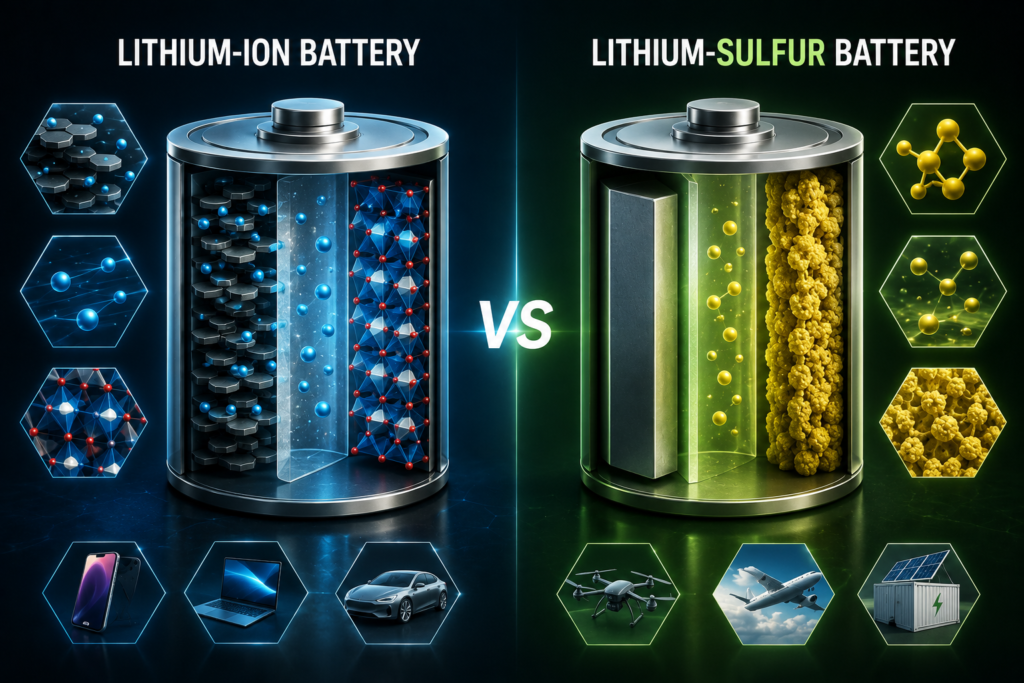
Quick Recap: What Is a Lithium-Sulfur Battery?
A lithium-sulfur (Li-S) battery uses a sulfur cathode and a lithium-metal anode, giving it a theoretical energy density several times higher than a standard lithium-ion battery — the core reason it generated so much excitement back in 2020. Sulfur is also cheap and abundant, and Li-S cells avoid the nickel and cobalt used in most lithium-ion cathodes, which made the cost story compelling too.
So, Did It Come True? An Honest Scorecard
Revisiting a years-old tech prediction honestly means checking what actually happened, not just repeating the original hype:
- Lithium-sulfur in phones: Still hasn’t happened. The same problems that existed in 2020 — a degradation issue called the “polysulfide shuttle effect,” plus lithium-metal anode instability — still haven’t been solved at a scale manufacturers can mass-produce reliably.
- 5-day phone battery life: Not from lithium-sulfur specifically, but phones have gotten meaningfully better battery life through a different route — see below.
- Fast charging speeds: This part of the story moved fast. 65W (the flagship speed referenced in 2020) is now solidly mid-range — many phones, especially in the Chinese market, now charge at 100W to over 300W, filling a battery in well under 20 minutes.
- Electric car batteries: Lithium-sulfur hasn’t reached EVs either. Instead, solid-state batteries are the technology actually being piloted for future EVs, though they’re still pre-commercial as of 2026.
What’s Actually Powering Phones and EVs in 2026
Instead of lithium-sulfur, a different technology became the real near-term upgrade — here’s the current landscape:
| Battery Type | Where It’s Used Now | 2026 Status | Notes |
| Lithium-ion (standard) | Most current phones, laptops, EVs | Still the mainstream default | The baseline this whole comparison is measured against |
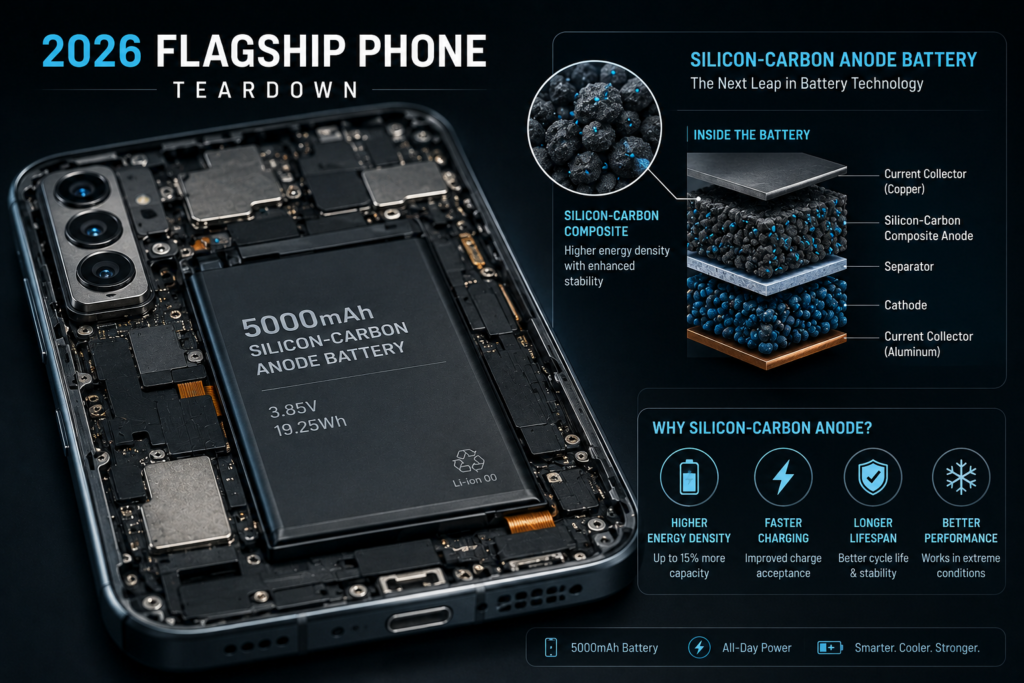
| Silicon-carbon anode | 2026 flagship phones (Xiaomi, OnePlus, Vivo, Oppo) | Actually shipping now | The real bridge tech — higher capacity in the same size |
| Lithium-sulfur | Research labs; early aviation/drone use | Not in phones yet | Still limited by cycle life and anode stability issues |
| Solid-state | Pilot EV programs only | Pre-commercial | Premium EVs expected late 2020s; phones later still |
| Sodium-ion | Emerging budget-segment devices | Early rollout | Cheaper materials, lower energy density — a budget play |
The genuinely interesting real-world development is silicon-carbon anode batteries — these swap the traditional graphite anode for a silicon-carbon mix, which can hold significantly more lithium in the same physical space. This is why current flagship phones can pack larger battery capacities into slim bodies without needing an entirely new, unproven chemistry like lithium-sulfur.
Where Is Lithium-Sulfur Actually Heading?
Rather than smartphones, lithium-sulfur’s real near-term future looks to be aviation and drones — applications where weight matters more than long-term cycle life, and where Li-S’s higher energy-per-kilogram genuinely pays off. It’s a good example of a technology finding its real-world niche in a different place than originally predicted, rather than the story simply being wrong.
What About Solid-State Batteries?
Solid-state batteries — which replace the liquid electrolyte in standard lithium-ion cells with a solid material — are the technology now closest to lithium-sulfur’s original 2020 hype level, but for EVs rather than phones. As of 2026, they remain at the pilot and pre-commercial stage: companies like QuantumScape, Solid Power, and Factorial are running real pilot programs with automakers, but most credible timelines point to limited, premium vehicle deployment in the late 2020s, with mass-market EVs and eventually phones following later, once manufacturing cost and yield genuinely catch up.
Quick Recap
- Lithium-sulfur batteries haven’t reached smartphones as predicted — cycle-life and anode stability problems remain unresolved at scale.
- Silicon-carbon anode batteries are the real 2026 upgrade already shipping in flagship phones, offering higher capacity in the same size.
- Lithium-sulfur’s realistic future looks like aviation and drones, not phones — a case of the tech finding a different niche than expected.
- Solid-state batteries are the current “next big thing” for EVs, still pre-commercial in 2026, with mass adoption still years away.
FAQs — Frequently Asked Questions
Q1. Are lithium-sulfur batteries used in phones in 2026?
No, not yet. Despite promising research since at least 2020, lithium-sulfur batteries still face unresolved cycle-life and lithium-metal anode stability issues that have prevented mass-market smartphone adoption.
Q2. What replaced lithium-sulfur as the next big smartphone battery upgrade?
Silicon-carbon anode batteries. They’re a more incremental but already-shipping upgrade to standard lithium-ion, found in real 2026 flagship phones from brands like Xiaomi, OnePlus, Vivo, and Oppo.
Q3. Why haven’t lithium-sulfur batteries reached smartphones yet?
Mainly due to the “polysulfide shuttle effect,” a degradation process that shortens battery lifespan, along with instability in the lithium-metal anode design — both remain difficult to solve at the manufacturing scale needed for consumer phones.
Q4. Where are lithium-sulfur batteries actually being used today?
Mostly in research and early-stage aviation and drone applications, where their high energy-per-kilogram matters more than long-term cycle durability — a better fit than smartphones for this technology’s current strengths.
Q5. What is a silicon-carbon battery?
It’s a lithium-ion battery that uses a silicon-carbon mix instead of pure graphite for the anode, allowing it to store more lithium in the same physical space — resulting in higher capacity without a larger battery.
Q6. Are solid-state batteries available in phones yet?
No, solid-state batteries remain in the pilot and pre-commercial stage in 2026, mostly being tested in EVs by companies like QuantumScape and Factorial. Smartphone adoption is expected even further out.
Q7. How much faster is phone charging now compared to 2020?
Significantly. 65W was considered flagship-level fast charging in 2020; many 2026 phones, especially in the Chinese market, now support 100W to over 300W charging, cutting full-charge times to well under 20 minutes.
Q8. What is a sodium-ion battery?
It’s an emerging, cheaper alternative to lithium-ion that uses sodium instead of lithium. It offers lower energy density but significantly cheaper materials, making it attractive for budget-segment devices rather than flagship phones.
Final Thoughts — The Prediction Was Directionally Right, Just Not in the Way Expected
The core idea from 2020 — that battery technology was overdue for a real leap — turned out to be correct. What changed is which specific technology delivered it: silicon-carbon anodes quietly became the real, shipping upgrade in phones, while lithium-sulfur found its niche in aviation and drones instead of smartphones. Solid-state batteries have inherited the “next big thing” spotlight for EVs, still years from mass adoption. It’s a good reminder that in battery tech, the “why” behind a prediction is often more durable than the specific “what.”
If you found this guide helpful, subscribe to the TapsVision YouTube channel and hit the bell icon — we post clear, well-researched tech explainers regularly, in both Hindi and Hinglish, just for you!
Subscribe TapsVision on YouTube for daily Hindi tech tips — battery technology, Android, and more!
Have a question? Comment below or message us on the YouTube video. Everyone is welcome in the TapsVision community!
— TapsVision